
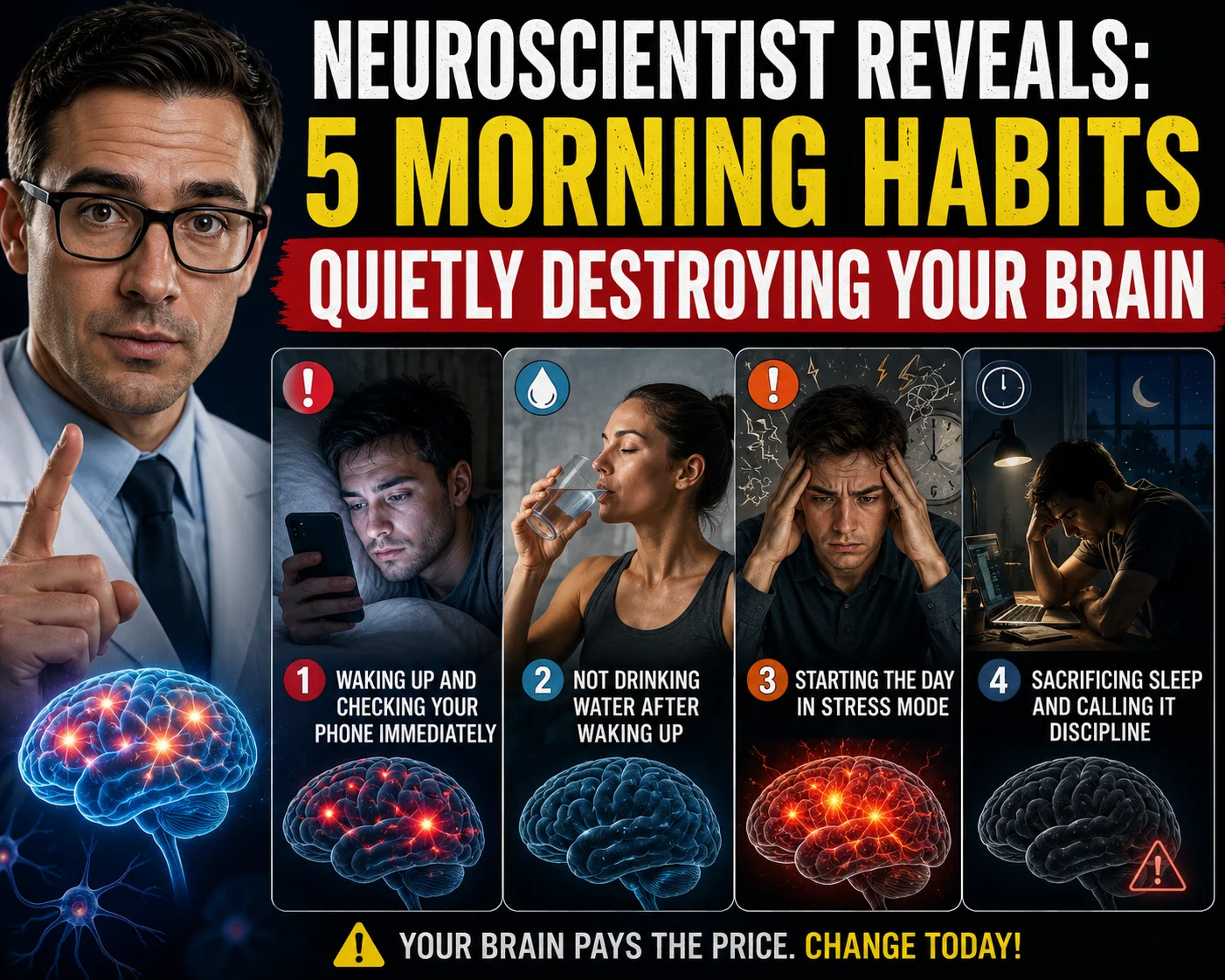
Neuroscientist Reveals: 5 Morning Habits Quietly Destroying Your Brain
Your brain does not wake up gently. The moment you open your eyes, it starts working. It helps you think, remember, decide, focus, control emotions, and move through the day. But here is the scary part: some of the “normal” things people do every morning may be quietly making their brain feel foggy, tired, stressed, and less sharp.
You may not notice it right away. It starts small. You forget where you put your keys. You feel irritated before breakfast. You struggle to focus at work. You need more caffeine just to feel human. You tell yourself, “I’m just tired.”
But your morning routine may be sending your brain the wrong signals before the day even begins.
Here are 5 morning habits that can hurt your brain health over time, and what to do instead.
1. Waking Up and Checking Your Phone Immediately

Most people do it without thinking. The alarm rings, they reach for the phone, and within seconds their brain is hit with messages, emails, bad news, social media, notifications, and other people’s opinions. That may feel normal, but it can overload your brain before it has fully settled into the day. Your brain needs a calm start.
When you check your phone right away, you can trigger stress, comparison, distraction, and mental clutter before you even get out of bed. Instead of beginning the morning with your own thoughts, you begin it with everyone else’s noise.
2. Skipping Breakfast and Running on Caffeine

Many people skip breakfast because they are busy, not hungry, or trying to save calories. Then they drink coffee and push through the morning. But your brain needs steady energy. After a night of sleep, your body has gone hours without food. For some people, skipping breakfast can lead to low energy, brain fog, mood swings, and poor focus.
Research has linked habitual breakfast skipping with worse cognitive outcomes in some groups, especially older adults, though individual needs can vary. The CDC also notes that breakfast is associated with better diet quality and academic outcomes among students.
3. Not Drinking Water After Waking Up

After sleeping for several hours, your body wakes up slightly dehydrated. If you start your morning with only coffee and no water, your brain may feel the difference. Even mild dehydration can affect mood, energy, headaches, physical performance, and cognitive function.
Many people mistake dehydration for tiredness. They think they need more caffeine, when their brain may simply need water.
4. Starting the Day in Stress Mode

Some people wake up and instantly panic. They think about bills, work, deadlines, family problems, traffic, emails, and everything that could go wrong. Before their feet touch the floor, their nervous system is already tense. Stress is not always avoidable, but living in stress mode every morning can wear down your mind.
esearch on stress hormones shows that chronic stress can affect brain systems involved in memory, learning, and emotional control.
5. Sacrificing Sleep and Calling It Discipline

Many people treat poor sleep like a badge of honor. They wake up early after sleeping only four or five hours and say, “I’ll be fine.” But your brain knows the truth. Sleep is when the brain restores, organizes memories, clears waste products, and prepares for the next day.
Sleep loss is strongly linked with poorer attention, slower reaction time, reduced alertness, and weaker cognitive performance. You cannot fully outwork sleep deprivation. You can only borrow energy for a while. Eventually, your brain collects the debt.
Suggestions
Your brain does not need a perfect morning. It needs a kinder one. You do not have to wake up at 5 a.m., run five miles, meditate for an hour, and drink a green smoothie to protect your brain. Real brain health often comes from simple habits repeated daily.
- Do not flood your mind with your phone the second you wake up.
- Do not run only on caffeine.
- Drink water.
- Calm your stress response.
- Respect your sleep.
These habits may look small, but your brain feels them. Every morning, you are either helping your brain feel clear, steady, and strong or pushing it into stress, fog, and fatigue before the day even begins.
Start gently. Your brain has been carrying you your whole life. It deserves better mornings.